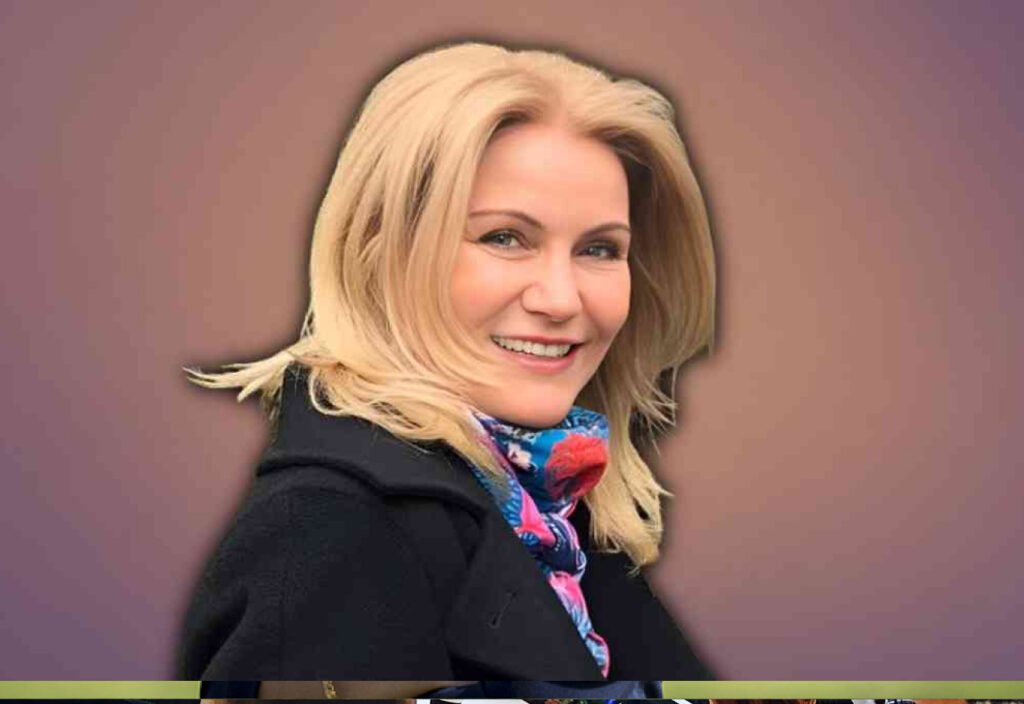

Charlotte Faircloth: Reframing Parenting, Gender, and Modern Family Life
In contemporary social science, few scholars have had as profound an impact on how we understand parenting culture, motherhood, and gender dynamics as Charlotte Faircloth. As an associate professor at University College London’s Social Research Institute, her research cuts across anthropology, sociology, and social policy — unpacking how modern parenting is shaped by cultural norms, institutional pressures, and moral judgments.
Early Life and Academic Roots
Charlotte Faircloth’s academic journey began with a strong foundation in anthropology. She completed her PhD in Social Anthropology at the University of Cambridge, where her ethnographic research focused on attachment parenting and long-term breastfeeding in London and Paris. ucl.academia.edu+2University of Kent – University of Kent+2 This doctoral work laid the foundation for her lifelong interest in how parenting is not just a private, emotional act but a deeply social and moral project.
After her PhD, Faircloth went on to serve as a postdoctoral researcher with the Foundation for the Sociology of Health and Illness, where she produced her groundbreaking book, Militant Lactivism? Attachment Parenting and Intensive Motherhood in the UK and France. ucl.academia.edu+1 Her early career also included a lecture post at the University of Roehampton, before moving to UCL.
Defining the Parenting Culture
One of Faircloth’s most influential contributions is her insistence that parenting itself has become a subject of cultural scrutiny and moral evaluation. In contemporary Western societies, she argues, parenting is no longer simply private or natural — it is deeply embedded in public discourse, subject to expert advice, and steeped in anxiety over “right” and “wrong” ways to raise children.
She co-authored Parenting Culture Studies, a volume that critically examines how parenting has evolved into a moral and cultural performance. ucl.academia.edu Through this lens, Faircloth highlights how modern parenting is shaped not just by personal desire or biological drive, but by a complex interplay of risk consciousness, individualization, and expert knowledge.
Militant Lactivism: Motherhood, Identity, and Moral Pressure
Faircloth’s Militant Lactivism? is perhaps her most well-known work. In it, she investigates the phenomenon of long-term breastfeeding (what she term “full-term” breastfeeding) and attachment parenting — but she doesn’t do so merely to document it. Instead, she shows how these practices are infused with cultural meaning, identity work, and moral value. berghahnbooks.com+2NetVol+2
Some key themes from her book:
- Intensive Motherhood: Faircloth ties the rise of attachment parenting to the ideology of intensive motherhood, in which mothers are expected to devote themselves emotionally, physically, and morally to their children. berghahnbooks.com
- Community and Belonging: She explores how mothers find social support, advice, and even activism in groups like La Leche League, forming what she calls “tribes” of like-minded individuals. berghahnbooks.com
- Science, Morality & Emotion: Faircloth reveals how scientific discourses about “what is best” for babies coexist — and sometimes clash — with deeply personal, emotional, and moral reasoning. Some mothers see breastfeeding not purely as a health choice, but as a deeply moral commitment. berghahnbooks.com
- Comparative Perspective: By comparing UK and France, she shows how cultural context shapes how parenting ideologies are lived and expressed. For example, what counts as “natural” or “science-based” in one country may differ in another. berghahnbooks.com
Through this work, Faircloth makes it clear that parenting decisions are not just practical — they are socially loaded, emotionally resonant, and identity‑forming.
Gender, Equality, and the Division of Care
Another central strand of Faircloth’s scholarship is her analysis of gender dynamics within family life. She is deeply interested in how caregiving is gendered, how responsibilities are allocated in couples, and how modern ideals of equality play out (or don’t) in daily parenting.
Her research reveals that even in couples who aim for egalitarian parenting, traditional gender expectations persist. Women continue to absorb a disproportionate share of the emotional labor, daily caregiving, and moral work of parenting. NetVol+1 These patterns are not accidental; they are shaped by broader social norms, institutional structures, and policy landscapes.
Faircloth also explores how intimacy and relationships change in the transition to parenthood. She highlights how couples negotiate care, time, and affection — and how these negotiations are often fraught, shaped by competing ideals of gender equality and intensive parenting. ucl.academia.edu+1
Reproduction, Policy, and Public Engagement
Beyond parenting in the narrower sense, Faircloth’s work also touches on themes of reproduction, public policy, and how social scientists engage in public debate.
She helps lead Repro@UCL, an interdisciplinary initiative that brings together researchers to examine reproduction, infertility, reproductive technologies, adoption, and family policy. uknewstap.co.uk Her role in this initiative underscores how parenting cannot be detached from reproduction — they are part of a broader social ecosystem.
Moreover, Faircloth has an active public presence. She participates in public lectures, podcasts, and policy conversations, translating her academic work into accessible insights about gender, care, and family life. IAI TV – Changing how the world thinks In a 2025 interview, she discussed her research project “50 Years of Becoming a Mother,” a longitudinal revisit of Ann Oakley’s influential 1970s study, which explores how motherhood has changed (or stayed the same) over five decades. RUC.dk+1
“50 Years of Becoming a Mother”: Revisiting the Past, Reimagining the Future
One of Faircloth’s most current and ambitious projects is her UKRI-funded study titled 50 Years of Becoming a Mother. RUC.dk This research revisits Ann Oakley’s pioneering work from the 1970s, asking how the experience of becoming a mother has changed across generations.
Some of the initial insights from this project:
- Many women still report a “shock” in the transition to motherhood, despite social changes and more available information. RUC.dk
- Everyday parenting practices, such as feeding, sleeping, and division of labor with partners, are shifting — but not always in predictable or linear ways. RUC.dk
- The role of partners is evolving. Faircloth notes that how fathers or other caregivers are involved has become a key site of change — and one that may reshape how we think about caregiving, gender, and responsibility. RUC.dk
- She also reflects on how welfare systems, family policies, and social norms must adapt to these changing dynamics, urging a more collective vision of social reproduction — one where raising children is seen not just as private responsibility but as a social good. RUC.dk
Impact on Sociology, Policy, and Parenting Discourse
Charlotte Faircloth’s work has wide-ranging influence. Here are some of the key areas where her contributions matter most:
- Academic Influence
- Her books and papers are foundational in parenting culture studies, gender sociology, and anthropological research on care.
- She champions interdisciplinary research, showing how anthropology, sociology, and social policy can inform one another.
- Her books and papers are foundational in parenting culture studies, gender sociology, and anthropological research on care.
- Policy Relevance
- Faircloth’s insights challenge policymakers to rethink how parenting support is structured — not just in health or childcare policy, but in how we frame care as a social good.
- Her work suggests that policy must go beyond individual behavior change: structural conditions (work, gender norms, welfare systems) must be addressed.
- Faircloth’s insights challenge policymakers to rethink how parenting support is structured — not just in health or childcare policy, but in how we frame care as a social good.
- Public Discourse
- By engaging in media, podcasts, and public lectures, Faircloth brings sociological rigor to conversations about parenting, making these ideas accessible to a wider audience.
- She helps shift public perception: parenting is not just a private choice — it’s a socially embedded, culturally shaped responsibility.
- By engaging in media, podcasts, and public lectures, Faircloth brings sociological rigor to conversations about parenting, making these ideas accessible to a wider audience.
- Teaching and Mentorship
- As a lecturer and mentor, Faircloth inspires new social scientists to think critically about parenthood, care, and gender.
- Her students benefit from her methodological sophistication and her commitment to reflexive, ethnographic research.
- As a lecturer and mentor, Faircloth inspires new social scientists to think critically about parenthood, care, and gender.
Criticisms and Challenges
Of course, like any prominent scholar, Faircloth’s work is not without its debates. Some critics argue that her framing of parenting culture can overstate the uniformity of “intensive parenting” or underestimate variations across socio-economic and cultural contexts. Others question how widely her findings (often based on U.K. or European populations) can generalize to non-Western settings.
There’s also a tension in her work between critique and advocacy: while she illuminates the moral burdens on parents, especially mothers, some wonder whether the solution lies in better social support or in transforming deeply ingrained social norms — and this remains an open question.
Why Charlotte Faircloth Matters Today
In a world where parenting is increasingly public, scrutinized, and moralized, Charlotte Faircloth’s scholarship feels more urgent than ever. Her work helps us:
- Understand why decisions like breastfeeding, co-sleeping, or attachment parenting feel so weighty — because they are not just personal, but cultural and moral.
- Recognize that gender equality in parenting is not simply a matter of will or good intentions; it’s enmeshed in systems, histories, and expectations.
- Advocate for structural change — fair policies, better support for care, and a social understanding of reproduction that goes beyond individual responsibility.
- Reflect on the changing meaning of motherhood across time — and ask important questions about how future generations will experience parenting.
Conclusion
Charlotte Faircloth stands as a deeply influential thinker in the field of social science. Her ethnographic rigor, conceptual clarity, and willingness to tackle morally loaded issues make her work indispensable for anyone interested in parenting, gender, and family life. By illuminating how deeply cultural our assumptions about “good parenting” are, she invites us to rethink not just individual behaviors, but the very frameworks through which we understand care and responsibility.